
Screen the site
Test utility capacity, interconnection timing, site constraints, alternate supply, and expansion logic.
Data centers & critical loads
HelioVector evaluates how much capacity can be secured, when it can be available, which supply alternatives warrant investment, and how the operating envelope should inform the infrastructure plan.
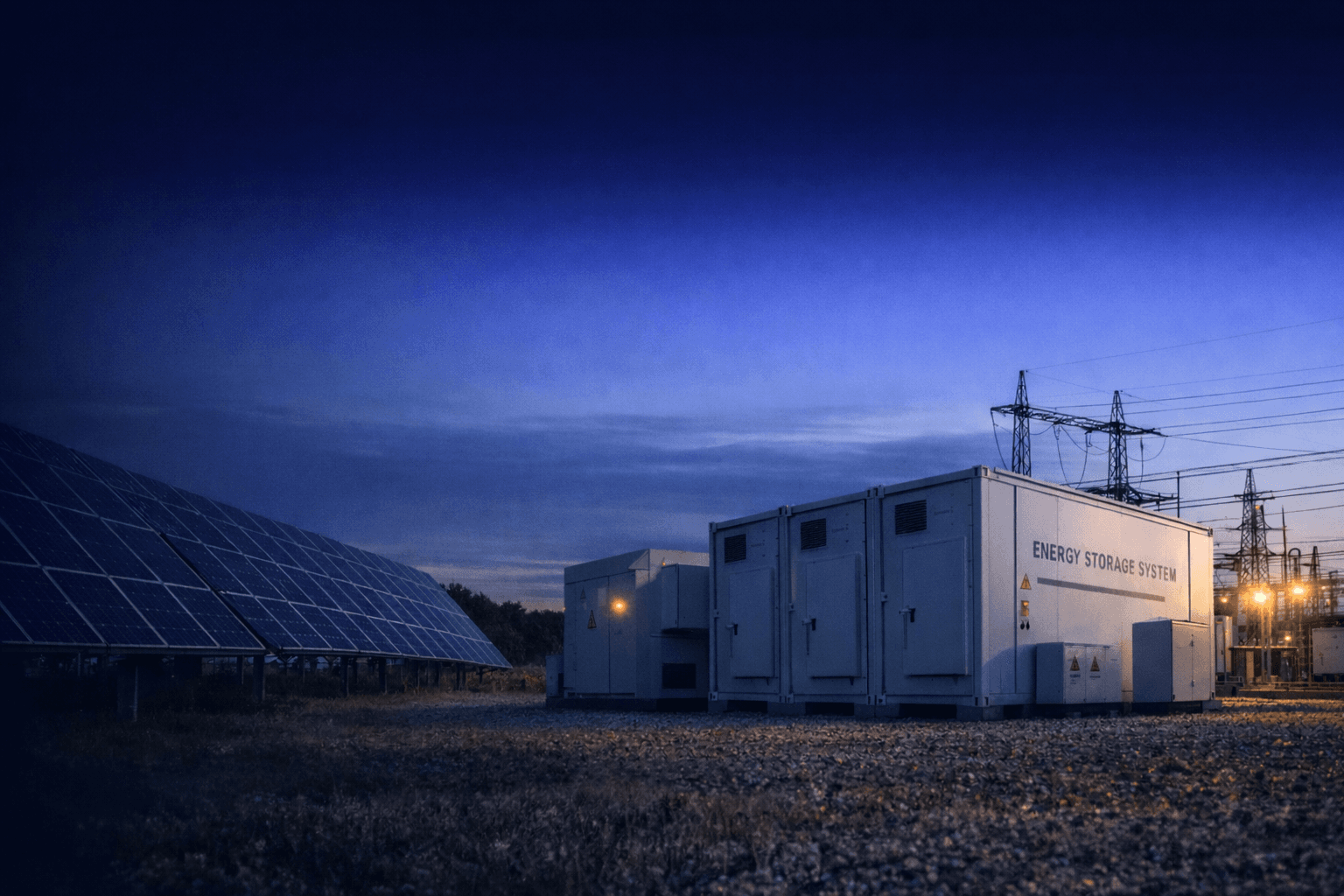
01 / Site to scale
We establish the site-power decision basis, quantify technical and commercial tradeoffs, and maintain that basis through the interfaces that govern delivery.
Test utility capacity, interconnection timing, site constraints, alternate supply, and expansion logic.
Compare grid, on-site generation, storage, microgrid, and flexible-load cases on one decision basis.
Connect power availability to compute, cooling, backup, ramp rates, and phased capacity.
Translate the selected path into scope, interfaces, procurement, commissioning, and operating evidence.
02 / Power pathway screen
The preferred pathway is site-specific. Evaluation should balance energization timing, reliability, cost, permitting, operability, and long-term flexibility.
Capacity, tariff, schedule, redundancy, upgrade obligations, and expansion rights.
Lower site complexity; utility capacity and timing may remain the principal constraint.
Peak support, ride-through, ramp control, market value, degradation, and controls.
Operationally flexible; value depends on duration, degradation, controls, and duty cycle.
Behind-the-meter supply, backup, fuel or supply constraints, and transition pathways.
May accelerate capacity; introduces permitting, supply, emissions, and asset-performance obligations.
Grid, generation, storage, controls, islanding, and black-start strategy.
Provides greater flexibility; requires clear control strategy and interface ownership.
03 / Energy coordination architecture
Team members have developed an Energy OS concept that coordinates compute orchestration with storage, cooling, backup power, power capping, and grid constraints. This experience is presented as a system architecture and integration concept rather than a commercially deployed HelioVector product.
04 / Design for change
Match power delivery and capital deployment to campus and workload growth.
Stress-test power and cooling against future rack-density scenarios.
Preserve options for evolving storage, generation, cooling, and controls.
Carry model assumptions into commissioning, monitoring, and optimization.
Start with the decision
HelioVector can structure the energy decision, model the tradeoffs, and define the path into delivery.
ray@heliovector.ai